




NINA
LEQEMBI PATIENT SINCE 2024
On this page:

LEQEMBI is available as intravenous (IV) infusions
This means a needle is placed in a vein in your arm to give the medicine.
Here's what to know if you're starting IV infusions:

Each infusion takes about 1 hour
You will likely be at the infusion center for longer than that, especially for your first infusion, so set aside extra time so you don't feel rushed.

Infusions are given twice monthly (once every 2 weeks)
For the first 18 months of treatment, you'll receive one infusion every 2 weeks. After
18 months, your healthcare provider may discuss a maintenance dose of one
infusion a month (once every 4 weeks) or switching to once-weekly
self-injections.

Infusions are given at a healthcare provider’s office or at an infusion center
Talk to your healthcare provider and insurance provider about where to get your infusions, or find a center using the link below.
The infusion process
Helpful tips and information to prepare for an infusion
-
Getting ready
for an infusion -
What to expect
during an infusion -
Staying
on track

Keep your phone
close by
You’ll likely get a call from your infusion center before your appointment to gather some extra information. That’s a good time to ask about anything you need to bring, such as paperwork and medication lists.

Wear short sleeves
Shirts with short sleeves or with sleeves that can be rolled up make it easier to get your infusion, but bring a blanket in case you get chilly.

Take along something to play, read, or watch
Bring something to entertain yourself to help make your appointment more enjoyable, and pack your headphones or earbuds along with your device chargers.

Bring a few snacks and a bottle of water
Drink plenty beforehand so you’re hydrated.
STEP 1
A member of the infusion care team will check your vital signs, like your temperature and blood pressure. You may also get weighed and have blood drawn.
STEP 2
Your care team will prepare your medicine, set up your IV line, and start your infusion. As you receive your medicine, pay attention to how you feel and keep them informed of any concerns.
STEP 3
After your infusion is finished your care team will remove the IV. Then they’ll tell you when you can leave and how to schedule your next infusion.

For care partners
To help make each appointment a little more enjoyable, consider games or other
activities you and your loved one can do together.

Infusion-related reactions
If you have an infusion-related reaction, your healthcare provider may:
• Adjust the flow or stop the infusion
• Give you medicines before your future LEQEMBI infusions to decrease your chance of having an infusion-related reaction. These medicines may include antihistamines, anti-inflammatory medicines, or steroids
In people with Alzheimer’s disease, amyloid brain plaque continuously builds up. LEQEMBI keeps working throughout treatment to remove harmful amyloid brain plaque. That’s why it’s important to stick with your treatment plan.
Even though you cannot feel LEQEMBI working day to day, staying on track with each
infusion helps treat Alzheimer’s disease. Your healthcare provider will monitor you for
side effects throughout treatment and may adjust your dose, pause treatment, or
stop treatment, if necessary.
Practical tips for staying on track

Schedule upcoming infusions well in advance and be sure to add the appointments to your calendar.
Plan ahead for any additional tests, such as your follow-up MRIs about 1 week before your 3rd, 5th, 7th, and 14th infusions. Your exact MRI schedule will be determined by your healthcare provider and may include additional MRIs.

Keep track of how you’re feeling between infusions and let your healthcare provider know if anything comes up.

If you miss an infusion of LEQEMBI, reach out to your healthcare provider. You should receive your next dose as soon as possible. They can help you get back on track.
Only LEQEMBI has FDA-approved maintenance dosing to keep slowing progression*
After 18 months of infusions, you may have the option of starting maintenance treatment. You may not be able to stop Alzheimer's disease, but continuing on LEQEMBI may help you keep seeing the benefits of slowing progression.
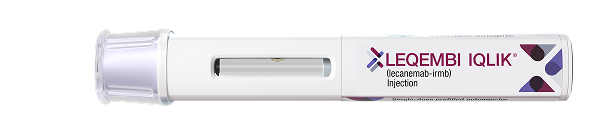
You and your healthcare provider will determine if you can switch to less-frequent, once-monthly (once every 4 weeks) infusions or switch to once-weekly self-injections with LEQEMBI IQLIK. If you and your healthcare provider decide that you should continue receiving LEQEMBI infusions, this option will be familiar to you; all that changes is how often you receive your infusions.
*Based on an 18-month study; compared with people not taking LEQEMBI. LEQEMBI does not cure Alzheimer’s disease or stop its progression.
Track treatment with the LEQEMBI Companion® app
Get the app



Infusions give me hope.
LEQEMBI PATIENT SINCE 2023