




LEONARD
LEQEMBI IQLIK PATIENT
Below are some commonly asked questions when considering LEQEMBI
Select a topic that you want to learn about and bring any additional questions to your healthcare provider.
About early Alzheimer’s disease
What are common symptoms of mild cognitive impairment (MCI) and mild dementia due to Alzheimer’s disease?
Common symptoms can include problems with memory, language, and thinking. However, there may be other symptoms beyond forgetfulness, such as behavioral or mood changes, that close friends and family may notice. This is not a complete list of symptoms of Alzheimer's disease. Only a healthcare provider can diagnose Alzheimer's disease.
Learn more about common symptoms of early Alzheimer’s disease.What causes Alzheimer’s disease?
Alzheimer's disease is a brain condition that gets worse over time. It may be caused by a protein called amyloid continuously building up in your brain, forming harmful amyloid brain plaque. Though there are different types of amyloid proteins, all of them can damage brain cells.
Learn more about early Alzheimer’s disease.Does Alzheimer's disease run in families?
Sometimes. Alzheimer's disease does have a genetic component, but it does not mean the disease is guaranteed to pass down through families.
Learn more about the signs and symptoms of Alzheimer's disease.Can Alzheimer's disease be prevented?
There is no proven way to prevent Alzheimer's disease. If you or your loved one are seeing signs of early Alzheimer's disease, talk to a healthcare provider about lifestyle changes that could help.
Schedule an appointment with an early Alzheimer's specialist.What's the difference between symptoms of early Alzheimer's disease and just getting older?
Forgetfulness can be a normal part of aging, like misplacing items or forgetting to pay a bill. Alzheimer's disease causes more noticeable differences and impacts a person's daily life. People with Alzheimer's disease may have problems keeping track of days or the time of year, or struggle to have a conversation. This is not a complete list of symptoms of early Alzheimer's disease. Only a healthcare provider can diagnose early Alzheimer's disease.
Learn more about early Alzheimer’s disease signs and symptoms.Can Alzheimer's disease be cured?
There is currently no cure for Alzheimer's disease. Even though Alzheimer's disease progression can't be stopped, LEQEMBI was proven to significantly slow its progression.*
Read about results with LEQEMBI.
*
Based on an 18-month study; compared with people not taking LEQEMBI. LEQEMBI does not cure Alzheimer's
disease or stop its progression.
Can you have Alzheimer's disease at a young age?
Yes, there are cases where signs of Alzheimer's disease begin to show up earlier than age 65, but this type of Alzheimer's disease is less common. This is referred to as early-onset Alzheimer's disease.
See a list of signs and symptoms for people in the early stages of Alzheimer's disease.How do I know if my symptoms are caused by early Alzheimer's disease?
If you or your loved one is experiencing memory and thinking problems, it’s important to talk with your healthcare provider. They may review your medical history or run a few tests or exams to determine what’s causing your symptoms. Only a healthcare provider can diagnose early Alzheimer's disease.
Learn more about testing for early Alzheimer’s disease.How many stages of Alzheimer’s disease are there?
There are 3 main stages of Alzheimer’s disease: early, middle, and late. Recognizing which stage the disease is in is important, because LEQEMBI is for people in the early stage of Alzheimer’s disease, which includes mild cognitive impairment (MCI) and mild Alzheimer’s dementia. Alzheimer’s disease often starts as MCI and progresses.
Learn about the different stages of Alzheimer’s disease.How do I know which stage of Alzheimer’s disease I’m in?
Your healthcare provider will perform tests to confirm your specific diagnosis.
Learn more about testing for early Alzheimer’s disease.What tests, if any, can help confirm an early Alzheimer’s disease diagnosis?
Your healthcare provider may perform a cognitive or neurological exam, order lab tests, or have you take an MRI to evaluate your brain health. These can help determine if your symptoms are due to early Alzheimer’s disease.
Learn more about testing for early Alzheimer’s disease.About LEQEMBI
How does LEQEMBI fight early Alzheimer’s disease?
Alzheimer’s disease is a brain condition that gets worse over time. It may happen when a protein called amyloid continuously builds up in your brain, forming harmful amyloid brain plaque.
Only LEQEMBI fights early Alzheimer’s disease in 2 ways. It rapidly clears amyloid brain plaque, and keeps working to clear harmful amyloid proteins.
Once you start LEQEMBI, it can get to work by fighting the buildup of amyloid proteins. People taking LEQEMBI were shown to have less amyloid brain plaque as early as 3 months.
Watch a video about how LEQEMBI works in the brain.Why is it important to remove amyloid brain plaque?
Over time, it can build up and make it difficult to do things like think, remember, and problem-solve.
Watch a video about how LEQEMBI works in the brain.How was LEQEMBI studied?
LEQEMBI was proven to significantly slow the progression of Alzheimer’s disease in an 18-month study. Progression was measured using a Clinical Dementia Rating (CDR) scale by asking people how Alzheimer’s disease impacted different abilities, including remembering, completing daily tasks, staying active, problem-solving, knowing your way around, and doing activities independently.
The study included 1,795 men and women, ages 50 to 90, from different ethnic and racial backgrounds. They had either mild cognitivie impairment (MCI) or mild dementia due to Alzheimer’s disease.
Learn more about the LEQEMBI study.What stage of Alzheimer’s disease does LEQEMBI treat?
LEQEMBI may be right for you if you are in the early stage of Alzheimer’s disease, known as mild cognitive impairment (MCI) and mild dementia due to Alzheimer’s disease—when symptoms are still manageable without too much daily support.
Learn more about symptoms to look out for.What tests are needed to determine if LEQEMBI is right for me?
Your healthcare provider will decide which tests are needed to check for amyloid brain plaque, such as a blood-based biomarker (BBM) test, amyloid positron emission tomography (PET) scan, or a cerebrospinal fluid (CSF) test.
Discover other tests you should know about.How may LEQEMBI help people with early Alzheimer's disease?
In an 18-month study of people with early Alzheimer’s disease, LEQEMBI was proven to significantly slow the progression of early Alzheimer's disease. Even though you cannot stop Alzheimer’s disease from getting worse, you can take steps to slow how fast it progresses.
Learn more about results with LEQEMBI.How is LEQEMBI administered?
LEQEMBI is the only anti-amyloid treatment that offers 2 treatment options: self-injections with LEQEMBI IQLIK or IV infusions.
Learn about LEQEMBI IQLIK self-injections.
Learn about infusions with LEQEMBI.
What are the potential side effects of LEQEMBI?
Some of the possible side effects of LEQEMBI include ARIA (Amyloid-Related Imaging Abnormalities), serious allergic reactions, infusion-related reactions, injection-related reactions, and/or headaches.
Learn more about the potential side effects of LEQEMBI.What is ARIA (Amyloid-Related Imaging Abnormalities)?
ARIA is a potential serious side effect of treatments like LEQEMBI and can be fatal. ARIA commonly shows up as temporary swelling or bleeding in the brain, and can only be seen with MRI monitoring.
Most of the time, ARIA does not cause any symptoms, though serious symptoms can occur and can be fatal.
Will I be monitored throughout treatment for symptoms of ARIA (Amyloid-Related Imaging Abnormalities)?
It’s important to know that all anti-amyloid treatments for Alzheimer’s disease include MRI monitoring. LEQEMBI can cause serious side effects, including one called ARIA (Amyloid-Related Imaging Abnormalities). ARIA commonly shows up as temporary swelling or bleeding in the brain, and can only be seen with MRI monitoring.
Most of the time, ARIA does not cause any symptoms, though serious symptoms can occur and can be fatal.
That’s why you will receive an MRI before treatment and 4 MRIs after you start treatment—to help your healthcare provider spot any changes early and make decisions to keep you safe.
Your exact MRI schedule will be determined by your healthcare provider and may include additional MRIs.
What are the symptoms of ARIA (Amyloid-Related Imaging Abnormalities) that I should look out for?
Most people with ARIA don't have any symptoms. However, some people may notice: headache, confusion, dizziness, vision changes, nausea, difficulty walking, seizures, difficulty speaking, or muscle weakness.
Get more information about ARIA.LEQEMBI IQLIK self-injections
Are LEQEMBI IQLIK self-injections just as effective as infusions?
LEQEMBI IQLIK contains the same medicine as the LEQEMBI infusion, with comparable results and safety.
How does the LEQEMBI IQLIK autoinjector work?
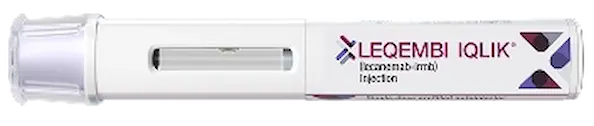
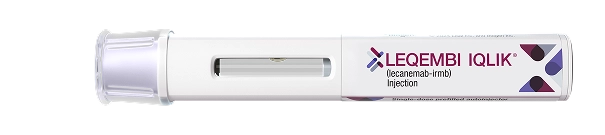
The LEQEMBI IQLIK autoinjector is designed to deliver a pre-measured dose of LEQEMBI just under the skin (a subcutaneous injection) without requiring a syringe.
Learn more about how to inject LEQEMBI IQLIK.How often do I use LEQEMBI IQLIK?
There are 2 different doses of LEQEMBI IQLIK, depending on how and when you start treatment. Your healthcare provider will confirm your dose.
During your first 18 months of treatment, you will inject two 250-mg autoinjectors, once a week (once every 7 days).
After treating with LEQEMBI for 18 months, you may have the option of starting maintenance treatment. However, you and your healthcare provider may decide to continue your current treatment plan, even after 18 months. Talk to your healthcare provider to determine the plan that's best for you.
If you are beginning maintenance treatment with LEQEMBI IQLIK, your dose is one 360-mg autoinjector, once weekly (every 7 days).
Where do I inject LEQEMBI IQLIK in my body?
LEQEMBI IQLIK can be injected into the front of the thighs, stomach area (abdomen), or back of the upper arms with the help of a healthcare provider or a care partner.
Do not inject within 1 inch of last week's injection site. Do not inject into moles, scars, bruises, or tattoos, or into areas where the skin is red, hard, tender, or injured.
If your dose includes 2 autoinjectors, use the second autoinjector immediately after the first to complete your full prescribed dose. Use a different injection site at least 1 inch away from the last site each time you use LEQEMBI IQLIK.
Use the injection tracker in the What To Expect Treatment Tracker to take note of your injections and where you’ve injected, so you can stay on top of your at-home injection schedule.
Learn more about how to inject LEQEMBI IQLIK.Where should I avoid injecting?
Do not inject within 2 inches of your belly button. Do not inject within 1 inch of last week's injection site. Do not inject into moles, scars, bruises, or tattoos, or into areas where the skin is red, hard, tender, or injured.
If your dose includes 2 autoinjectors, use the second autoinjector immediately after the first to complete your full prescribed dose. Use a different injection site at least 1 inch away from the last site each time you use LEQEMBI IQLIK.
Learn more about where to inject LEQEMBI IQLIK.Can I put the clear cap back on LEQEMBI IQLIK once I remove it?
Do not replace or put the clear cap back on once it has been removed from the autoinjector. Doing so may damage the device, cause the medication to be released by mistake, or result in a needle injury.
What are alcohol prep pads? Are they the same as other disinfection wipes?
Alcohol prep pads are small, single-use pads saturated with isopropyl alcohol. They are designed specifically to clean and disinfect the skin before injections or minor medical procedures. They are not the same as general disinfection wipes, which may contain different chemicals, fragrances, or additives and are not intended for use on skin before injections.
Are air bubbles inside LEQEMBI IQLIK normal?
Yes, it is normal to see air bubbles in the medication inside your autoinjector.
Learn more about how to inject LEQEMBI IQLIK.What do I do if I see something in the drug?
Be sure to inspect the medication inside your autoinjector for particles or discoloration before injecting. The medication inside should be a clear and colorless to pale yellow solution, and free of visible particles. Do not use if the medicine looks cloudy, discolored, or contains particles.
If you believe your autoinjector is damaged, expired, has been dropped, or notice anything out of the ordinary, call 1-888-274-2378 or email esi_medinfo@eisai.com. Save the autoinjector and original packaging.Will the injection cause bleeding?
You may notice a small drop of blood on the area you injected in. This is normal, and you can gently press a cotton ball or gauze to the area, or put an adhesive bandage over it. Talk to your healthcare provider if you have any questions about side effects with LEQEMBI IQLIK.
How do I know my injection is complete?
Throughout the injection process, you may hear 2 clicks. The second click is a sign that the injection is complete. Make sure you don’t lift the autoinjector too early—keep holding the autoinjector in place for at least 5 more seconds after the injection is complete.
Learn more about how to inject LEQEMBI IQLIK.Do I inject the second autoinjector right after I inject the first?
If your dose includes 2 autoinjectors, use the second autoinjector immediately after the first to complete your full prescribed dose. Use a different injection site at least 1 inch away from the last site each time you use LEQEMBI IQLIK.
Learn more about where to inject LEQEMBI IQLIK.Are some injection spots more painful than others?
Everybody has a different pain tolerance and some areas may be more comfortable than others. If you find that 1 of the 3 injection locations is less painful than another, you can inject in the same location as long as it is within 1 inch of your last injection location. Remember, you can only inject into the front of the thighs, stomach area, or the back of the upper arms (with the help of a healthcare provider or care partner).
Does LEQEMBI IQLIK deliver the same medicine that I received with my infusions?
LEQEMBI IQLIK contains the same medicine as the LEQEMBI infusion, with comparable results and safety.
What is a sharps disposal container and how do I get one?
Your specialty pharmacy may provide you with an FDA-approved sharps disposal container. You may also use a household container that is made of heavy-duty plastic and can be closed with a tight-fitting, puncture-resistant lid that's upright, leak-resistant, and properly labeled to warn of hazardous waste.
To learn more about safe sharps disposal and ways to get a container, go to FDA.gov/SafeSharpsDisposal.What should I do when my sharps container is full?
Do not throw your sharps container into a regular trash bin. Follow your community guidelines for the right way to throw away your sharps container. There may be state or local laws about how you should throw away used needles and syringes. For more information about safe sharps disposal, and for specific information about sharps disposal in your state, visit FDA.gov/SafeSharpsDisposal, call Safe Needle Disposal at 1-800-643-1643, or email info@safeneedledisposal.org.
Can I travel with a sharps container?
Travel-size sharps containers are available for purchase at commercial retailers. Small laundry detergent bottles, water or soda bottles, and other plastic food jars may be used if the plastic is thick enough to be puncture-resistant and it has a tight-fitting lid.
If I decide at-home injections aren’t for me, can I go back to infusions?
If you have concerns about self-injections, you may be able to switch back to IV infusions. Talk to your healthcare provider. They can help make sure you receive LEQEMBI in the way that works best for you.
How is LEQEMBI IQLIK delivered?
Since LEQEMBI IQLIK needs to stay refrigerated, it will be delivered through a specialty pharmacy. The number of autoinjectors in each shipment will be determined by your healthcare provider and/or your specialty pharmacy.
If your shipment of LEQEMBI IQLIK doesn’t arrive by the expected date, reach out to your specialty pharmacy as soon as possible.When should I contact my specialty pharmacy for next month’s supply?
Your specialty pharmacy should contact you to coordinate your next shipment of LEQEMBI IQLIK. If your specialty pharmacy has not yet reached out and you only have 2 doses left, please contact them to avoid missing a dose.
What if my shipment from the pharmacy doesn’t arrive?
If your shipment of LEQEMBI IQLIK doesn’t arrive by the expected date, reach out to your specialty pharmacy as soon as possible.
What do I do if my shipment box is damaged, is missing doses, or contains damaged product?
If the carton or the autoinjectors are damaged, missing doses, or expired, call 1-888-274-2378 or email esi_medinfo@eisai.com.
What if I miss an injection?
If you miss a scheduled injection, inject both autoinjectors as soon as you are able. You can still inject up to 6 days after the missed dose. Then take your next dose on your usual scheduled day. After that, you can continue with your normal dosing schedule. Visit LEQEMBI.com/HowToInject for an overview of the injection process.
You can download the LEQEMBI Companion app to help you stay on track with your injection schedule, get reminders, and get personalized content.
Download the LEQEMBI Companion app.How can the LEQEMBI Companion app help me stay on track?
The LEQEMBI Companion app is your digital partner designed to help support you at every step of your treatment.
Use the app to start treatment and stay on track. It makes it easy to log your injections, set reminders, stay on top of your schedule, and more. Talk to your healthcare provider if you have any questions about your treatment plan.
Download the LEQEMBI Companion app.How will LEQEMBI IQLIK interact with what I’m already taking?
As with any medicine, there’s a possibility that LEQEMBI could interact with something else you are taking. Tell your healthcare provider about all of the medicines you take, including prescription and over-the-counter medicines, vitamins, and herbal supplements. Especially tell your healthcare provider if you take medicines to reduce blood clots from forming (antithrombotic medicines, including aspirin).
Can I travel with LEQEMBI IQLIK?
Yes, you can take LEQEMBI IQLIK with you on the go. Before you leave on a trip, always check the autoinjector to make sure it hasn’t expired. You should also consider getting a small sharps disposal container to bring with you.
Reach out to your specialty pharmacy in advance before your trip to let them know your schedule and make sure you have enough autoinjectors. They can help you arrange shipping to your destination, if necessary.
If you are flying, reach out to your airline to see if you can carry injection devices on the plane. At the airport, notify the TSA screener that you are carrying an autoinjector. It’s also a good idea to bring a doctor’s note with you in case you are asked for one. For more information on how to store LEQEMBI IQLIK while traveling, download the Instructions for Use.How do I store LEQEMBI IQLIK?
You should store your cartons in a refrigerator between 36 ºF to 46 ºF (2 ºC to 8 ºC). Do not freeze. Keep in the original carton until ready to use to protect it from light. When you are ready to inject, take 1 carton out of the refrigerator and let it sit at room temperature for 20 minutes. Do not shake. Do not try to speed up the warming process in any way.
Your LEQEMBI IQLIK carton can also be stored at room temperature (77 °F/25 °C) for up to 14 days. Do not place back into the refrigerator once it reaches room temperature. Throw away LEQEMBI IQLIK that is out of date, or if it is not stored the right way. Keep your LEQEMBI IQLIK autoinjector and all medicines out of the reach of children.What if I have questions or need help with LEQEMBI IQLIK?
It’s a good idea to reach out to your healthcare provider with any questions you have about using LEQEMBI IQLIK. There are also resources available to help you learn how to inject and stay on track with treatment, including step-by-step instructions.
If I started treatment with LEQEMBI IV infusions, when can I switch to LEQEMBI IQLIK?
If you started treatment with LEQEMBI IV infusions, you can switch to self-injections when you want to if your healthcare provider determines it’s a good option for you.
Your first at-home injection should be 2 weeks from your last infusion. Your healthcare provider can help answer any questions you may have about starting LEQEMBI IQLIK.How can I get a LEQEMBI IQLIK practice autoinjector kit?
Once your healthcare provider prescribes LEQEMBI IQLIK, you will likely receive a demo kit that contains an autoinjector without medication or needle so you can practice injecting.
The kit may be mailed to you by your specialty pharmacy or given to you by your healthcare provider. The kit is a helpful way to get familiar with injecting, but it is not needed to safely use LEQEMBI IQLIK.
If you do not receive your kit, contact the LEQEMBI Companion program by calling 1-833-453-7362 (1-833-4-LEQEMBI).LEQEMBI IV infusions
How are infusions given?
LEQEMBI is available as an intravenous (IV) infusion. This means a needle is placed in a vein in your arm to give the medicine. Initially, infusions are given twice monthly (once every 2 weeks).
Where do I go for my infusions?
Infusions will be given at a healthcare provider’s office or an infusion center. Talk to your healthcare provider and insurance provider about where to get your infusions, or find a center.
How can I find an infusion center near me?
You can use the LEQEMBI infusion center locator to find a center near you.
Find an infusion center near you.How long do infusions take?
Each infusion takes about 1 hour. You will likely be at the infusion center for longer than that, especially for your first infusion, so set aside extra time so you don't feel rushed.
What should I do if I miss an infusion?
If you miss an infusion of LEQEMBI, you should receive your next dose as soon as possible.
What resources are offered by Eisai to support me throughout treatment?
The LEQEMBI Companion app is a support tool designed to help you start and stay on track with your treatment. You can access a variety of features to use at every stage of your LEQEMBI treatment.
Learn all about the LEQEMBI Companion app.Why are my LEQEMBI infusions important?
Your infusions keep LEQEMBI working in your body. Plus, these visits give your care team opportunities to check in on you. Let them know right away if anything comes up.
Maintenance treatment after 18 months
Will my treatment schedule change?
After 18 months of treatment, you may switch to maintenance infusions once monthly (once every 4 weeks) or at-home injections once weekly (once every 7 days). Alternatively, you may continue on your twice-monthly (once every 2 weeks) infusion schedule if you and your healthcare provider determine that’s the best plan for you.
How long do I need to take LEQEMBI?
After 18 months of treatment, talk to your healthcare provider about how you are doing on LEQEMBI and when might be the right time to reevaluate your treatment schedule. This could mean less frequent infusions or switching to at-home injections.
Each option keeps LEQEMBI working in your body and fighting Alzheimer’s disease. Everyone’s treatment experience may look a little different. Talk to your healthcare provider if you have any more questions about LEQEMBI.
Find questions to ask your healthcare provider hereDetails.How do I know the right maintenance treatment for me?
The right maintenance option can depend on factors like your experience with self-injections with LEQEMBI IQLIK or with getting IV infusions. Your healthcare provider will help you choose the best option to keep LEQEMBI working in your body.
Learn more about ongoing treatment options.Tips for care partners
What are some ways I can help my loved one while they are on treatment?
Doing things like coordinating appointments, helping keep track of injections, packing a treatment or infusion bag, and sharing your phone number with healthcare providers are all ways you can support your loved one as they adjust to LEQEMBI.
How can I help my loved one manage their day-to-day activities?
There are plenty of ways to help your loved one with their daily activities. Reminding them of their appointments, helping keep track of injections, setting up autopay for recurring bills, and prefilling a medication organizer are just a few.
Discover more ways you can help your loved one while they are on treatment hereDetails.How can I take care of myself during this time?
Joining local support groups and building a support network are great ways to help both yourself and your loved one.
See more tips about how you can care for yourself hereDetails.Financial support & educational resources
How can I receive financial support?
Start by asking your healthcare provider to enroll you in the LEQEMBI Companion program. It can help identify potential financial support programs that you may be eligible for.
Learn more about the LEQEMBI Companion program and how to enroll hereDetails.What is the cost of LEQEMBI?
What you’ll pay for LEQEMBI depends on a number of different factors, like your prescription insurance, out-of-pocket costs, and your specific dose. Learn more about costs hereDetails.
How do I pay for LEQEMBI?
People who are enrolled in the LEQEMBI Companion program can get help with understanding insurance coverage and potential out-of-pocket costs for LEQEMBI.
Learn more about how the LEQEMBI Companion program can help throughout treatment hereDetails.How can the LEQEMBI Companion program support me?
The LEQEMBI Companion program can help you with information about accessing treatment, understanding insurance coverage and potential out-of-pocket costs, and identifying financial support programs you may be eligible for.
As a part of the LEQEMBI Companion program, you can get resources to help you understand insurance coverage and financial assistance eligibility.
Learn more about how the LEQEMBI Companion program can help throughout treatment here.Is LEQEMBI covered by Medicare?
Medicare coverage typically depends on eligibility requirements and coverage guidelines that vary by plan and individual situation.
The LEQEMBI Companion program can help you understand insurance coverage, identify financial support, and more.
Get more information about the LEQEMBI Companion program.Are there support options if I'm on Medicare?
The Medicare Prescription Payment Plan is a payment option that works with your current drug coverage to help you manage your out-of-pocket costs for drugs covered by your plan by spreading them across the calendar year (January–December). Anyone with a Medicare drug plan or Medicare health plan with drug coverage (like a Medicare Advantage Plan with drug coverage) can use this payment option. All plans offer this payment option, and participation is voluntary.
